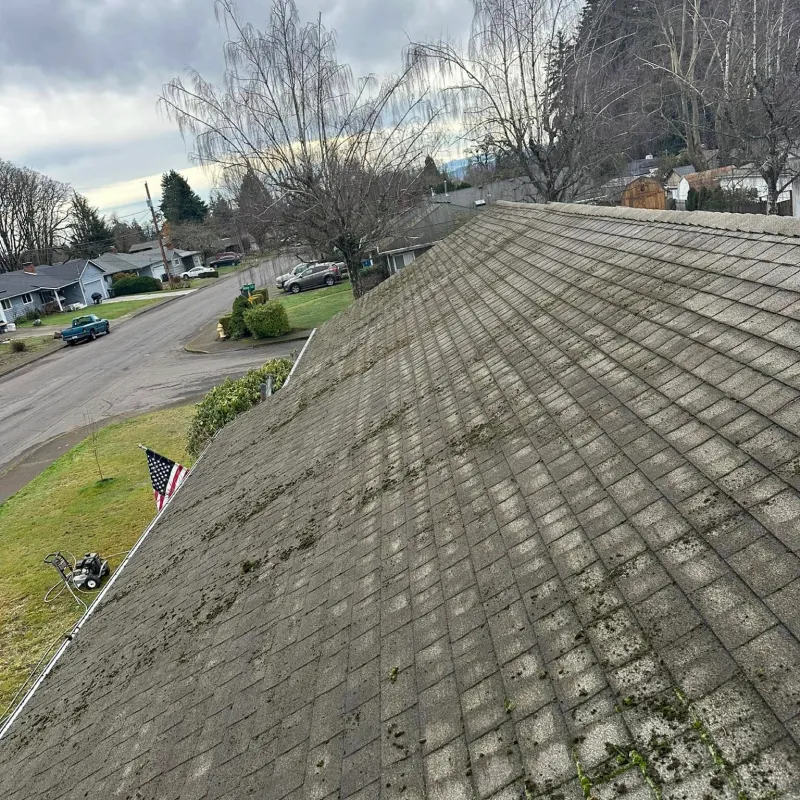
The safest way to deal with roof moss in Oregon is to avoid aggressive scraping and high pressure, evaluate the roof's condition first, and use a careful, low-pressure approach that protects the shingles underneath. Moss is a symptom of moisture and shade, so removing it without damaging the roofing or addressing the conditions that caused it usually leads to the problem returning.
Oregon's long wet seasons, heavy tree cover, and slow-drying rooflines create near-perfect conditions for moss to take hold. While it is tempting to power-wash it away or scrape it off, those methods can do more harm than the moss itself. The goal is to remove the growth while preserving the roofing material and planning realistic prevention.
Why Oregon Roofs Grow So Much Moss
Moss thrives where moisture lingers and sunlight is limited. In the Willamette Valley, roofs often stay damp for long stretches, especially on north-facing slopes and under mature trees. Leaves, needles, and debris that collect in valleys and gutters trap even more moisture against the shingles, giving moss a place to anchor and spread.
Shade is the other major factor. A roof section that rarely sees direct sun dries slowly after each rain, and moss takes advantage of that constant dampness. Homes surrounded by tall trees, in wooded neighborhoods, or near waterways tend to see faster moss growth than exposed, sun-baked roofs.
Why Aggressive Removal Can Damage Roofing
It is easy to assume that blasting moss off with a pressure washer is the fastest solution, but high pressure is one of the most common ways roofs get damaged during cleaning. The force can strip protective granules off asphalt shingles, force water underneath the shingle edges, and even crack or break brittle roofing material.
Hard scraping carries similar risks. Moss often anchors into the surface, and tearing it loose can pull granules and even shingle material away with it. On older roofs, the shingles may already be brittle, making aggressive removal especially risky. A careful, low-pressure approach that lets the growth break down before gentle removal is far safer for the roofing itself.
What a Careful Evaluation Should Consider
Before any moss is touched, the roof should be evaluated for its age, condition, and the type of roofing material. A newer, flexible shingle roof tolerates cleaning differently than an older, brittle one. The extent of the moss growth, whether shingle edges are already lifting, and whether there are soft or damaged areas all influence the safest approach.
Gutters and drainage matter too. Clogged gutters overflow onto the roof edge and keep lower sections wet, feeding moss growth. Nearby landscaping that shades the roof or drops debris onto it contributes to the problem. A thorough evaluation looks at the whole picture, not just the visible moss, so the cleaning and any prevention plan actually address the cause.
Fall Protection and When Not to DIY
Working on a roof is inherently dangerous, especially when it is wet, mossy, and slippery. Moss-covered surfaces are surprisingly slick, and a damp Oregon roof in the wrong season is a serious fall risk. Proper fall protection, stable access, and the right footing matter far more than most homeowners realize.
For that reason, roof moss removal is often not a safe DIY project. Steep pitches, multi-story homes, brittle older roofing, and roofs with extensive growth are all situations where professional evaluation and service make sense. If you are unsure whether the roof is safe to walk on, that uncertainty itself is a good reason to request professional help rather than climbing up.
Practical Prevention and Inspection Habits
After moss is addressed, prevention comes down to reducing moisture and debris. Keep gutters and downspouts clear so water moves away from the roof, trim back branches that shade the roof or drop debris onto it, and remove leaf buildup from valleys and roof edges regularly. These simple habits make a real difference in how quickly moss returns.
Inspect the roof from the ground a couple of times a year, particularly after fall and before the wet season. Look for green or dark streaks, lifted shingle edges, and debris collecting in valleys. Catching growth early keeps the problem manageable and reduces the chance of moisture working its way beneath the roofing.
Warning Signs That Merit Professional Evaluation
Some signs go beyond simple cosmetic moss and suggest the roofing itself may need attention. If shingle edges are visibly lifting or curling, if you find granules washing into the gutters in large amounts, or if there are dark, water-stained patches on the roof or interior ceilings, it is time for a professional evaluation.
Extensive moss coverage across large sections of the roof, growth in multiple valleys, or moss that appears to be lifting the shingles are all reasons to bring in a professional rather than attempting removal yourself. The team at Over The Top Painting & Remodeling can evaluate the situation and recommend a careful approach. Learn more on the moss removal service page or request a free estimate to discuss your roof.