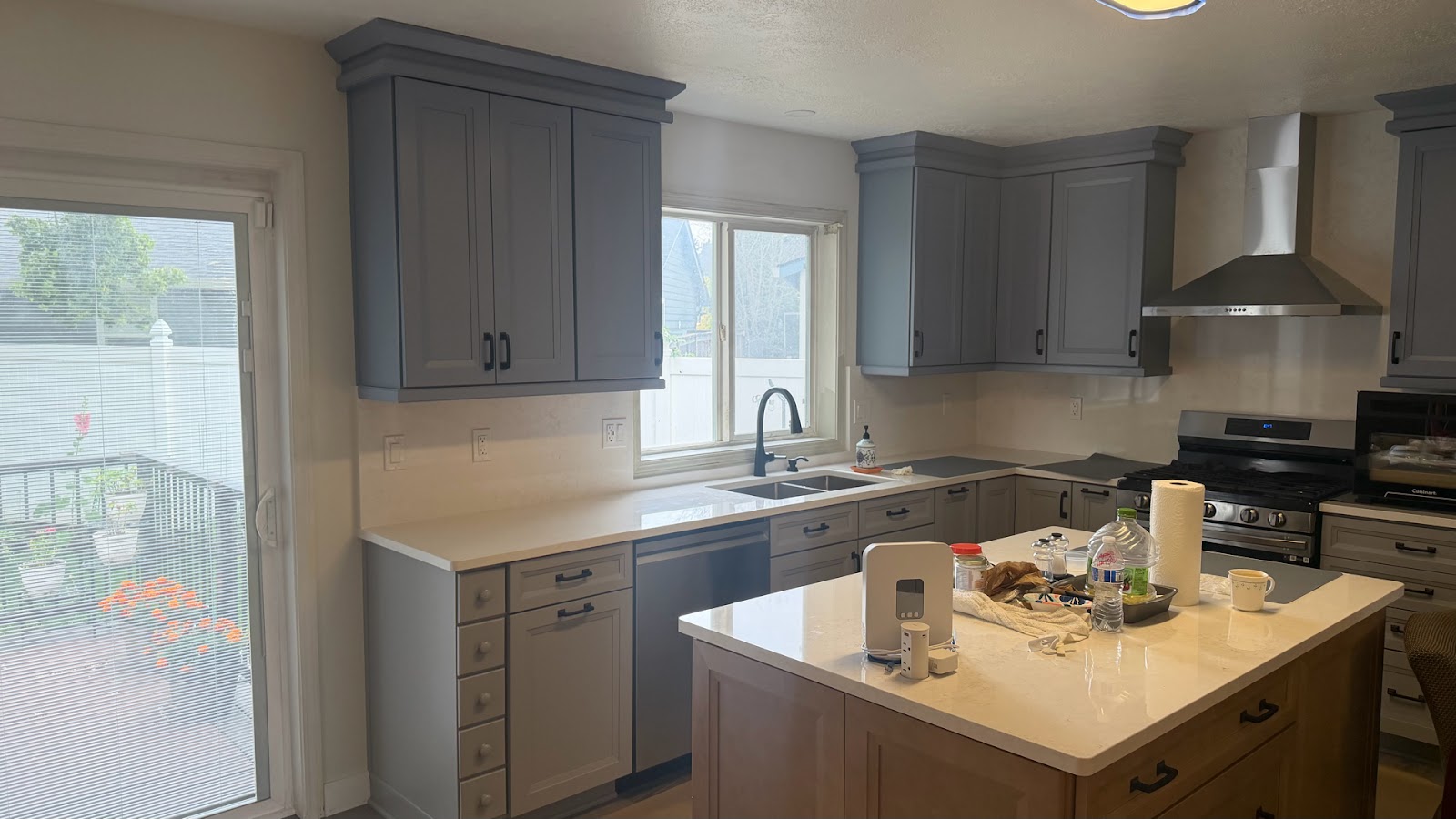
As a general rule, final wall and ceiling painting belongs after the disruptive phases of a kitchen remodel, demolition, cabinet installation, countertop templating, and flooring, are complete. Painting too early almost guarantees scuffs, touch-ups, and rework. But that does not mean painting is an afterthought: color selection, finish samples, priming, and some prep work should happen early in the planning process.
The key is sequencing. When painting is planned as part of the remodel from the start, rather than tacked on at the end, the whole project flows more smoothly and the finished kitchen looks intentional. Here is how to think about when each painting step fits into a kitchen remodel.
Why Final Painting Usually Comes Last
A kitchen remodel is hard on walls. Demolition creates dust and debris, new cabinets are maneuvered into place against the walls, countertop installation involves tools and pressure, and flooring work can scuff baseboards and lower wall areas. If the final coat of paint goes on before any of that, it will almost certainly need touch-ups or a full repaint by the time the dust settles.
Final painting after installation means the walls get one clean, uninterrupted finish at the end, when the space is settled and the new cabinetry, counters, and trim are already in place. It also allows the painter to cut in precisely around the new elements rather than working around placeholders.
What Should Happen Early: Planning, Color, and Samples
Even though the final coat comes last, several painting decisions belong at the beginning. Wall color should be chosen alongside cabinet finishes, countertop slabs, flooring, and backsplash tile so the whole palette works together. Selecting paint in isolation often leads to a finish that clashes once the other materials arrive.
This is also the time to gather samples and test them in the actual kitchen lighting. Paint colors shift dramatically under warm under-cabinet lighting versus natural daylight, and a swatch that looks right in the store can look entirely different on the wall. Planning color and finish early gives you time to adjust before the final coat goes on.
Sequencing Around Cabinets, Counters, and Flooring
A sensible sequence runs roughly: demolition, rough-in work, drywall repair, cabinet installation, countertop templating and installation, flooring, trim, and then final wall and ceiling painting. Drywall repair often happens after cabinets are removed or walls are opened, and it should be completed and sanded before any finish paint goes on.
Cabinet refinishing or painting is a separate consideration. If existing cabinets are being refinished rather than replaced, that work is often best done before the final wall painting so overspray or sanding dust does not land on fresh walls. Trim and baseboards are typically painted or installed and painted after flooring, with final wall painting wrapping up the sequence.
Exceptions: Cabinet Refinishing and Hard-to-Reach Areas
There are exceptions to the paint-last rule. Cabinet refinishing or repainting, as mentioned, usually happens before final wall painting. Some hard-to-reach areas, such as behind where appliances will sit or above upper cabinets that will be enclosed, may need to be painted early because they will be inaccessible once installation is complete.
Priming newly installed or repaired drywall can also happen earlier in the process, with the finish coats reserved for the end. The point is not to follow a rigid rule but to think through which surfaces will be reachable and which will be covered or obstructed, then sequence accordingly.
How Coordinated Remodeling and Painting Reduces Rework
When the same team handles both the remodeling and the painting, sequencing becomes far simpler. There is no handoff gap between trades, no miscommunication about who is responsible for drywall repair or trim, and no risk of one trade's work undoing another's. The painter knows exactly when the space is ready for the final coat because they are part of the same project.
Coordination also reduces rework. A remodeling team that understands painting will protect finished surfaces during installation, plan drywall repairs to minimize patching, and sequence trim and walls so nothing has to be redone. That is one of the main advantages of working with a single team for both remodeling and painting.
A Practical Planning Timeline
A workable timeline looks something like this: early in planning, choose colors, cabinet finishes, and countertop materials together and test paint samples in the actual space. During demolition and rough-in, handle drywall repair and priming. After cabinets, counters, and flooring are installed, paint trim and baseboards. Finally, apply the finish wall and ceiling coats and do touch-ups.
If you are planning a kitchen remodel, the team at Over The Top Painting & Remodeling can help coordinate both the remodeling and the painting so the sequence works from the start. Learn more about kitchen remodeling, remodeling services, and interior painting, or request a free estimate to discuss your project.