Pressure washing and soft washing are two different cleaning methods, and using the wrong one can cause real damage. The core difference is simple: pressure washing relies on higher water pressure to blast grime off durable surfaces, while soft washing uses lower pressure with a treatment-based approach to clean delicate surfaces without stressing the material underneath.
Choosing the right method comes down to what you are cleaning and what condition it is in. A concrete driveway and an asphalt-shingle roof have very different tolerances, and Oregon's moisture and organic growth make that distinction even more important.
What Pressure Washing Actually Does
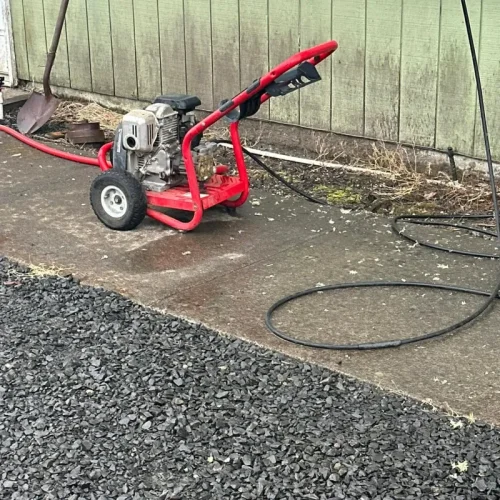
Pressure washing directs a concentrated, higher-pressure stream of water at a surface to lift dirt, oil, algae, and staining. It is well suited to durable, hard materials like concrete driveways, sidewalks, garage floors, and patios, where the surface can handle the force without being etched or damaged.
It is also useful as a preparation step before painting or staining. Removing chalking, dirt, mold, and loose material creates a sound starting point so new coatings adhere properly and last longer. The key is matching the pressure and technique to the material, because too much pressure on the wrong surface does more harm than good.
What Soft Washing Actually Does
Soft washing uses lower pressure with a targeted treatment approach. The treatment is given proper dwell time so algae, mildew, and organic staining break down, and then the surface is rinsed in a controlled way. Because the cleaning happens through the treatment rather than brute force, soft washing is the safer choice for surfaces that high pressure can damage.
This method is well suited to asphalt shingles, painted siding, soffits, fascia, gutters, and decorative trim. It is also valuable before repainting, because it cleans delicate surfaces gently so new coatings adhere without the damage high pressure can cause.
Risks of Excessive Pressure
Excessive pressure is one of the fastest ways to damage an exterior. It can etch concrete, gouge wood, force water beneath siding or under shingles, and strip paint or stain that was still serviceable. Driving water where it should not go can create problems worse than the growth you were trying to remove.
That is why a surface should always be inspected before cleaning. Softer materials, older finishes, and degraded surfaces may need lower pressure or a gentler method, and the approach is adjusted based on what the surface can safely handle.
Organic Growth and Oregon Moisture
Oregon's wet seasons, shade, and slow-drying surfaces create ideal conditions for algae, mildew, and moss. These growths do more than look bad. They trap moisture against surfaces, and over time that moisture can degrade coatings, lift shingle edges, and create slippery, unsafe walkways.
Regular exterior cleaning helps, but the method has to fit the surface. A roof covered in moss needs a gentle, low-pressure approach, while a stained concrete driveway can usually handle more direct cleaning. Matching the method to the material is what keeps the property looking good without causing damage.
When Surface Inspection Matters
Before any cleaning, the surface should be inspected for its type, condition, and the degree of buildup. A painted siding wall with a failing finish cannot be treated the same as a sound, freshly coated wall. A roof with brittle, aging shingles needs a gentler approach than a newer one.
Inspection also determines whether cleaning is being done for appearance, for safety, or as preparation for painting or staining. Each goal points to a slightly different approach, and a clear evaluation keeps the work effective and safe.
Practical Decision Factors for Homeowners
If you are deciding between the two, start with the surface. Hard, durable materials like concrete, brick, and stone are generally candidates for pressure washing. Delicate surfaces like roofing, painted siding, soffits, and decorative trim are generally better suited to soft washing.
When in doubt, ask for an inspection. The team at Over The Top Painting & Remodeling can evaluate the surface and recommend the right method. Learn more on the pressure washing and soft washing service pages, or request a free estimate to discuss your property.